Benefits & Impact
Creating value for culture, research, education, and society.
CHRONOS supports cultural institutions while opening new possibilities for researchers, educators, students, citizens, and future digital heritage innovation.
Why It Matters
CHRONOS turns cultural data into a shared national resource.
The platform is not only a technical repository. It creates a foundation for preserving collections, improving access to cultural knowledge, supporting education, strengthening research, and enabling future services in tourism, creative industries, and digital heritage.
By using open standards and interoperable data, CHRONOS helps cultural institutions become part of a wider national and European digital ecosystem.
Who Benefits
Designed for different communities around cultural heritage.
CHRONOS creates value for the people who manage collections, study them, teach with them, and discover them.
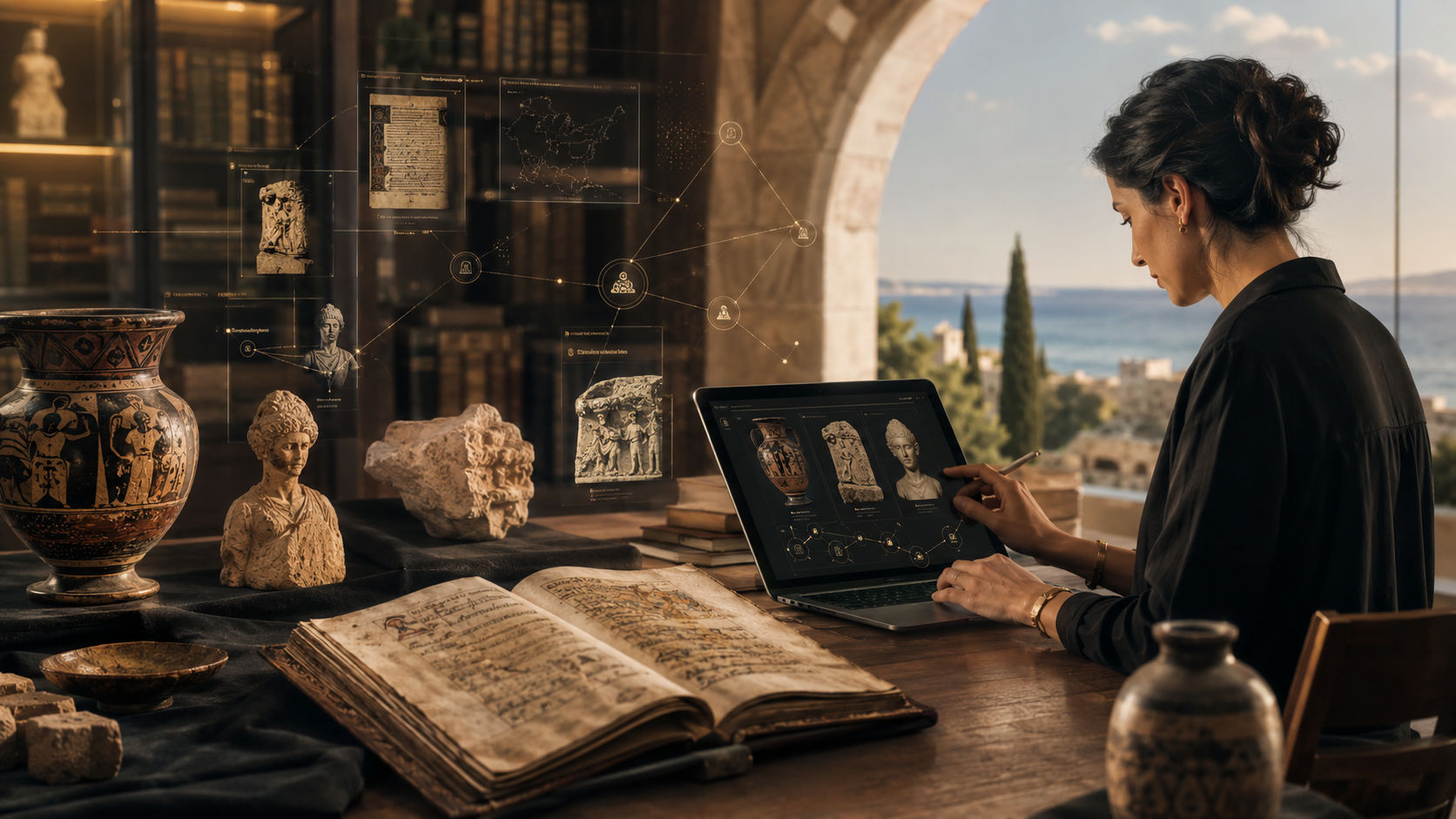
Museums, archives, and cultural organisations
CHRONOS gives smaller institutions access to modern digital tools without the need to build expensive standalone systems. It supports collection documentation, digital preservation, online publishing, and better internal workflows.
- Shared repository and collection management tools
- Structured metadata for better documentation
- Reduced technical barriers for cultural professionals
- Improved visibility for collections and institutions
Researchers and digital humanities teams
Researchers benefit from more accessible, structured, and reusable cultural data. Semantic metadata, knowledge graphs, and APIs can support advanced discovery, analysis, and cross-institutional research.
- More discoverable cultural heritage datasets
- Interoperability with international standards
- Support for knowledge graphs and linked open data
- Reusable data for future research projects
Education, students, and the public
CHRONOS helps transform cultural collections into educational and public resources. Schools, universities, students, citizens, and visitors can discover authentic cultural materials in more accessible and meaningful ways.
- Authentic materials for teaching and learning
- Better public access to cultural heritage
- Support for cultural inclusion and community memory
- New opportunities for storytelling and interpretation
Expected Impact
A platform with cultural, educational, technological, and economic value.
Cultural Preservation
Supports the long-term preservation and digital visibility of collections that may otherwise remain difficult to access.
Institutional Capacity
Helps cultural professionals develop skills in documentation, metadata, digital publishing, and open data practices.
Innovation
Creates reusable software components, APIs, and services that can support future national or European initiatives.
Creative Economy
Opens possibilities for new applications in tourism, education, cultural technology, and creative industries.
Future Opportunities
A foundation for more tools and services.
Once the CHRONOS architecture exists, it can support additional modules and future platforms: conservation workflows, painting analysis tools, education portals, tourism applications, institutional dashboards, CRM-style operations, ERP-style internal management, and new cultural heritage services.
Shared Value
CHRONOS helps cultural heritage become visible, connected, and reusable.
A long-term digital foundation for institutions, researchers, educators, citizens, and future innovation.
View Pilot Institutions